
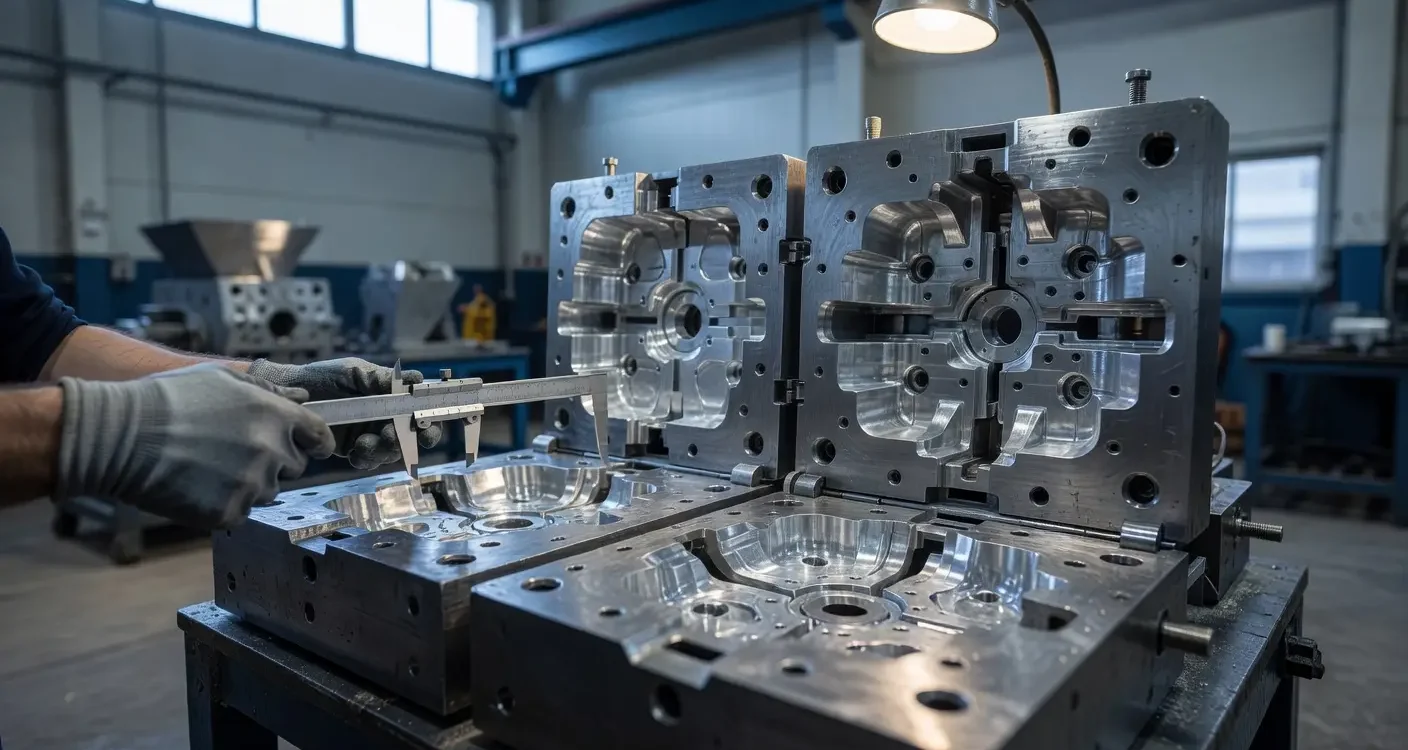
The first aluminum casting design directly determines the cost of launching the mold and the number of subsequent adjustments. Errors in the initial geometry or poorly chosen add-ons require further iterations of the model, which significantly lengthens the production preparation time. Precise detailing planning before the first attempt reduces these costs to a minimum.
Why does the first design of the mold decide on the costs?
The modeling phase determines the direction of the entire foundry process. Incorrect assumptions regarding the wall thickness or the arrangement of the feed lead to porosity and cracks in the material. As Wako Odlewnia we know from experience that a well-thought-out first iteration of the mold reduces the number of physical tests by half. This limits the consumption of aluminum and the time spent by CNC machines during final tool adjustments.
What data needs to be collected before modeling the form?
The dimensions of the detail, tolerances, and functional requirements of the finished item are crucial. The design team analyzes this information to precisely match the form to the actual structural needs.
The most important input parameters are:
- the target thickness of individual walls,
- exact location of mounting holes,
- surfaces intended for subsequent machining by cutting,
- specific working conditions of the finished product.
The completeness of this data facilitates the production of robust components for the automotive, energy, and medical industries.
How does casting geometry affect shrinkage and solidification?
The foundry shrinkage for aluminum alloys is usually between 1.0 and 1.5 percent. The uneven thickness of the walls in one detail slows down this process and creates dangerous pore-contraction porosity. Uniform cross-sections and rounded corners with a radius of at least 2–3 mm ensure uniform bonding of the metal. This shape effectively minimizes the risk of voids forming inside the material structure. Too sharp geometric angles almost always require subsequent modifications to the original model.
How to properly select the additives and power supply for the mold?
The surcharge for cutting processing is standardly between 1 and 5 mm per side., Depending on the overall dimensions of the component. The power supply system and the necessary vias are usually placed in the thickest parts of the component. This arrangement precisely compensates for the shrinkage of the shrinking alloy. If you plan to mass produce parts, an early verification of the design is a good step. Proven for many business partners foundry in Warsaw or nearby Pruszków provides optimal engineering support. The thoughtful inclusion of additional features ensures the raw material needed for the final finishing process.
What does the trial casting verify before the start of production?
The execution of the first casting reveals the actual behavior of the metal in the designed form. Customers of Wako Odlewnia receive a physical product that undergoes rigorous quality measurements. We control the final dimensions, surface smoothness, and the possible presence of internal defects. The most common corrections at this stage include modifying the injection system, thickening the thin walls, or increasing the radii in areas exposed to the greatest stresses.
When is the design of a form considered fully ready?
We approve the model for serial production when the test part strictly adheres to the specified dimensional tolerances. The absence of visible structural defects ultimately confirms the correctness of the implemented power supply system. If the measurement machines indicate excessive porosity, we introduce another targeted iteration of the design.
The main signals confirming the readiness of the tool are:
- compliance with the dimensional guidelines at a contraction of 1.0–1.5%,
- stable, smooth surface without cracks in the corners,
- sufficient stock of material for turning or milling,
- confirmed absence of hidden air pockets in the cross-section.
Full control over the entire production cycle guarantees the production of a repeatable component right from the start of the first batches.
A properly designed foundry mold is the foundation for optimizing the cost of mass-producing aluminum components. It is crucial to take into account material shrinkage at levels of 1-1.5% and to use radii of curvature above 2 mm to prevent structural defects. Appropriately selected finishing elements for machining and the precise placement of the feeding system in the thickest sections of the part guarantee repeatability and high quality of the final industrial components.
FAQ
What parameters of the aluminum alloy have the strongest influence on the design of the mold?
The most important factors are the solidification temperature and the fluidity of the selected aluminum alloy. These parameters determine the arrangement of the injection channels and the speed of filling the mold cavity, which directly translates into the surface finish of the part.
Why is avoiding sharp angles crucial for the strength of the casting?
Sharp angles in the design of the mold become natural concentrators of stress during metal solidification. This often leads to structural microcracks, which disqualify components intended for operation under high mechanical loads.
How do errors in the calculation of the contraction affect subsequent CNC machining?
An incorrect assumption of the shrink ratio usually results in too little material on surfaces intended for turning or milling. As a result, cutting tools cannot achieve the required smoothness or final dimension, which often forces the costly production of a new mold.
Does the planned surface finish affect the design of the mold?
Yes, parts intended for powder coating require a specific design of air vents inside the mold. This prevents gas bubbles from forming under the casting skin, which could reveal themselves as aesthetic defects during the curing of the paint at high temperatures.

 Polski
  English (UK)
  Deutsch
  Español
  Français
  Українська
  Русский
  Čeština
  Slovenčina
  Svenska
  Română