
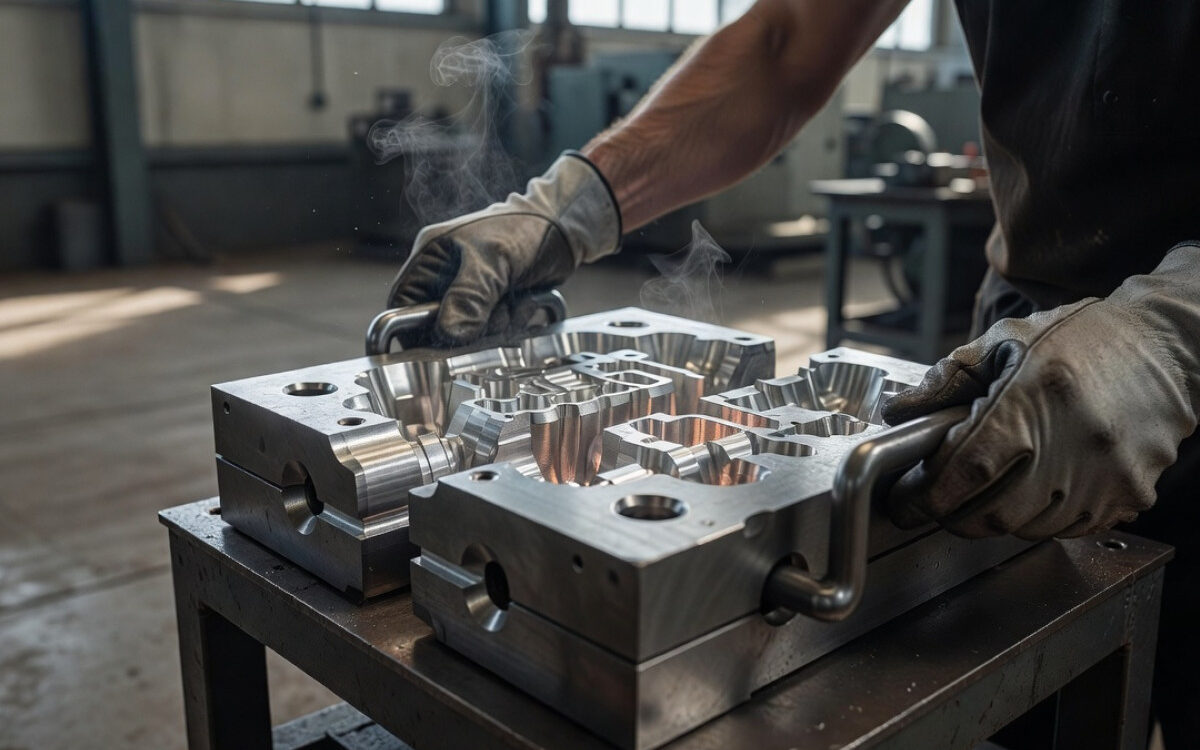
The choice of manufacturing technologies for lightweight metal alloy components determines their subsequent mechanical properties and overall production costs. The choice of method is primarily based on precision analysis, repeatability, and order size. The comparison of the capabilities of sand mold with a metal shell makes it easier to optimize the production process for a specific industrial application.
Why does accuracy and scale of production determine the choice of technology?
The decision to choose a specific casting process results directly from acceptable dimensional tolerances and the number of pieces ordered. Small batches or parts with very complex geometries are most often produced in sand molds. This reduces the initial costs of production with smaller quantities. Greater market demand leads the design towards permanent metal molds.
The criteria determining the choice of technology include:
- the required dimensional tolerance of the raw part before processing,
- the degree of complexity of the geometry and the presence of internal channels,
- the planned budget for the creation of matrix equipment.
In our foundry practice, we subject these parameters to verification already at the initial stage of the inquiry analysis. When preparing Custom-made aluminum castings, we choose the optimal technological path before starting proper modeling, To effectively prevent subsequent problems in the machine hall.
How does the conical shape affect the density of the casting?
Use of a steel or cast iron matrix guarantees the rapid dissipation of heat and a very uniform solidification of the liquid metal. Rapid temperature drop prevents the formation of gas bubbles inside the structure. This reduces the porosity of the detail and noticeably improves its strength properties. This technology allows for repeatability of ±0.076–0.127 mm.
The limited roughness of the top layer minimizes the need for aggressive machining. Cast-in-place demonstrates the greatest cost-effectiveness in projects involving between several hundred and several thousand pieces. The higher cost of manufacturing the matrix itself is offset by the repeated use of the same tool.
Where does sand casting offer the greatest freedom of design?
Use of bulk molding compounds allows the execution of complex shapes and bodies of significant dimensions. The use of additional cores allows for the design of deep channels and cuts that would not be possible with a rigid metal mold. This avoids the barrier of size and mechanical division of the mold.
The surface of such a detail retains a distinct roughness, and the standard tolerances are approximately ±0.5 mm. This requires taking into account a thicker backing for milling the mating surfaces and work surfaces. This solution is dominant during prototype testing and when producing individual machine parts.
Model design and power supply system and the risk of defects
A properly constructed model requires taking into account the natural contraction of the material, which is 1.2–1.5 % for aluminum alloys. The elaborate inlet system and appropriately designed outlets ensure a constant supply of liquid metal to the hardening area. This protects the component from the formation of destructive stress cracks at the locations where the wall thickness changes.
As a team handling production facilities, we perform modeling based on precise flow calculations. Aligning the solidification process with the appropriate batches eliminates any waste beyond the contour of the intended product. This reduces the percentage of defects and raw material consumption.
The impact of strict process control on repeatability
Maintaining identical flooding parameters and the time the detail remains in its form drastically reduces the variance in mechanical properties between successive deliveries. Constant control of the furnace temperature and cooling rate ensures the maintenance of a stable crystalline structure of the metal.
Operators of machining centers immediately detect variations in material hardness that occur during the sheet metal collection process. Quality verification from the ingot casting stage all the way through to final rolling protects against the release of defective parts for assembly.
Which industries require strict dimensional tolerances?
The automotive sector imposes absolute standards regarding tightness and resistance to sudden dynamic loads. Suspension elements or the powertrain are almost always built into the cabinets. The medical industry, on the other hand, expects the absolute absence of microcracks that would hinder the sterilization of the surfaces.
The energy sector and the production of construction machinery often require highly complex components, accepting wider tolerances. The burden of achieving precision in bearing hubs is transferred there to the milling table. If you plan to manufacture new industrial components, an early consultation with the foundry technologist is a good step to optimize the cost of the final equipment.
Optimizing the production cycle at one plant
Focusing on design work, mold filling and final CNC machining in one facility completely eliminates downtime associated with transporting raw castings. The problem of losing the measurement base when transferring a detail between different subcontractors is eliminated. Documentation remains in the hands of one team.
The internal flow of information between the foundry and the machining department allows for the model’s shape to be continuously adjusted to shorten the milling cycle. This integrated process radically shortens the time between the approval of the drawings and the shipment of the finished batch of goods.
The choice of aluminum casting technology depends on the required accuracy, geometry, and batch size. Kokila provides better repeatability, less porosity, and higher cost-effectiveness for larger batches. The sand mold provides greater freedom of shape, but usually requires larger additions and more precise machining. The quality is also determined by the model, the power supply system, and constant process control.
FAQ
When is it better to choose a mold instead of a sand mold?
Kokila is better for series of several hundred to several thousand pieces, when repeatability, lower porosity and better dimensional accuracy are important. It is particularly useful for components that need stable parameters between successive batches.
What are the main advantages of sand casting?
Sand casting offers greater design freedom, especially for complex shapes, large sizes, and internal channels. It is also advantageous for prototypes and small series, as it reduces the cost of preparing tooling.
Why does the model design matter so much for casting quality?
The model must take into account the strain contraction, the injection system and the overflow, because these limit the risk of aneurysm and other internal defects. A well-designed model reduces the number of repairs and limits material consumption.
How does full control of the process affect the series of aluminum castings?
Full control of the process stabilizes the temperature, cooling time, and filling conditions, which reduces quality variation between batches. As a result, subsequent batches have more similar mechanical properties and less waste.
Which industries most often require castings with the highest precision?
The automotive and medical industries place the highest demands, where tolerances, tightness, and the absence of microcracks are crucial. In the energy and construction sectors, greater freedom in geometry is more common, and accuracy is transferred to the cutting process stage.

 Polski
  English (UK)
  Deutsch
  Español
  Français
  Українська
  Русский
  Čeština
  Slovenčina
  Svenska
  Română